


Hair transplants in Rome offer natural, dense results with minimal invasiveness, no scars, and donor preservation, ideal for stable hair loss like receding hairlines or crown thinning. Procedure: Follicle extraction, angled implantation for realism, recovery in 3-12 months with permanent, DHT-resistant growth via post-op care. Suitable for moderate baldness with good donor quality; not for progressive thinning—consider meds as alternatives if ineligible.
Hair Transplant in Rome – Natural Results & Costs
In the heart of Italy’s eternal city, Rome offers world-class options for those seeking effective solutions to hair loss. Whether you’re exploring the cost of hair transplant in Rome or considering hair transplant Rome price, this guide covers everything from Micro FUE results to booking a hair transplant consultation. Discover why Micro FUE in Rome stands out for natural, dense hair restoration, and learn how to compare techniques like scarless hair transplant options. From understanding hair transplant causes of hair loss like androgenetic alopecia to post-op care, get all the details to make an informed decision.
Hair Transplant in Rome with Micro FUE for Natural and Dense Hair
Rome’s clinics specialize in advanced Micro FUE technique, delivering seamless results with high hair transplant density. This minimally invasive method ensures a natural hairline without the downtime of traditional procedures.
What is Micro FUE and how it works
What is Micro FUE? It’s an evolution of the Follicular Unit Extraction (FUE) method, using ultra-fine punches (0.7-0.9mm) to harvest individual follicular units from the donor area. Unlike classical FUE, Micro FUE minimizes trauma, preserving more viable grafts for implantation. The process involves gentle extraction under local anesthesia, followed by precise placement in balding zones. Ideal for those researching how hair transplant works, it addresses hair loss causes like genetics or stress by redistributing healthy follicles.
Why Micro FUE in Rome gives natural hairline and density
Rome’s experts excel in Micro FUE results, achieving up to 50-60 grafts per cm² for lifelike density. The technique allows for customized angles mimicking natural growth, perfect for receding hairlines or thinning crowns. Patients rave about reviews of hair transplant in Rome, noting the undetectable results even with short hairstyles. Compared to other methods, Micro FUE offers superior hair density in transplants, making it a top choice for authentic restoration.
Preserving donor area with modern hair transplant methods
A key advantage of Micro FUE in Rome is donor site preservation—random extraction patterns prevent over-harvesting, maintaining up to 90% of the original density. This preserves the donor area long-term, reducing risks of visible thinning. Modern tools ensure minimal scarring, aligning with scarless hair transplant goals and supporting future sessions if needed.
Compare Hair Transplant Options in Rome Before Booking
Before booking a hair transplant in Rome, weigh your options. From best hair transplant clinics in Rome to technique breakdowns, this section helps with comparing hair transplant techniques for optimal outcomes.
Micro FUE vs classical FUE and FUT for Roma patients
Micro FUE vs FUE: Micro FUE uses smaller tools for less tissue damage and faster healing than standard FUE. FUT (Follicular Unit Transplantation) involves strip harvesting, leaving linear scars unsuitable for short hair. For Rome patients, Micro FUE wins for no-scar hair transplants, with quicker recovery (3-5 days vs. 10+). Clinics in Rome prioritize Micro FUE technique for its precision in diverse hair types.
How graft number and technique affect cost and result
Graft count (1,500-4,000 typically) directly impacts hair transplant Rome price—expect €3,000-€7,000 based on coverage. Micro FUE yields higher survival rates (95%+), enhancing density over cheaper FUT. Factor in cost of hair transplant in Rome: technique efficiency reduces revisions, offering better value for moderate baldness.
What to ask your doctor before you decide
Key questions: “What’s my donor density?” “How many grafts for my pattern?” and “Show me Micro FUE results from similar cases.” Inquire about online hair transplant consultation options and post-op support. Top best hair transplant clinics in Rome provide transparent answers, including reviews of hair transplant in Rome.
Step by Step Hair Transplant Procedure in Rome
The hair transplant procedure in Rome is streamlined for comfort, from initial online hair transplant consultation to final touch-up.
Extraction of follicular units from the donor zone
Under magnification, surgeons select robust follicles from the back/sides (donor zone). Micro FUE extracts 1,000-2,000 units per session with robotic precision, preserving donor area preservation. This step takes 2-4 hours, ensuring grafts remain viable.
Implantation technique focused on density and natural angle
Grafts are sorted by size and implanted using implanters for exact depth and angle. Rome specialists emphasize natural hair distribution for seamless blending, achieving high hair transplant density without clumping.
Recovery timeline from crust formation to visible regrowth
Day 1-3: Mild swelling, crusts form. Week 1: Crusts shed. Months 1-3: Shock loss (temporary). Hair regrowth timeline after transplant: New growth at 3-4 months, full density by 12. Most resume work in 3 days.
Transparent Cost and Pricing of Hair Transplant in Rome
Understanding hair transplant Rome price is crucial—Rome offers competitive rates without compromising quality.
What determines the price of a hair transplant in Rome
Factors include grafts needed, surgeon expertise, and clinic tech. Micro FUE in Rome starts at €2.50/graft, influenced by case complexity like androgenetic alopecia solutions.
Typical grafts number and what you get for the cost
For crown coverage: 2,000 grafts (€4,000-€5,000). Frontal: 1,500 (€3,000+). Packages cover meds, follow-ups—value-packed for cost of hair transplant in Rome.
When an additional session may be recommended in the future
If progressive loss occurs, a touch-up after 12 months refines results. Stable cases rarely need more, but donor area quality guides planning.
What to Expect After Hair Transplant in Rome — Growth and Healing
Post-procedure care in Rome’s leading clinics emphasizes gentle healing to maximize Micro FUE results. Expect a phased recovery focusing on transplanted hair regrowth timeline, permanence, and adherence to post-operative guidelines for optimal outcomes.
Timeline of hair regrowth after Micro FUE
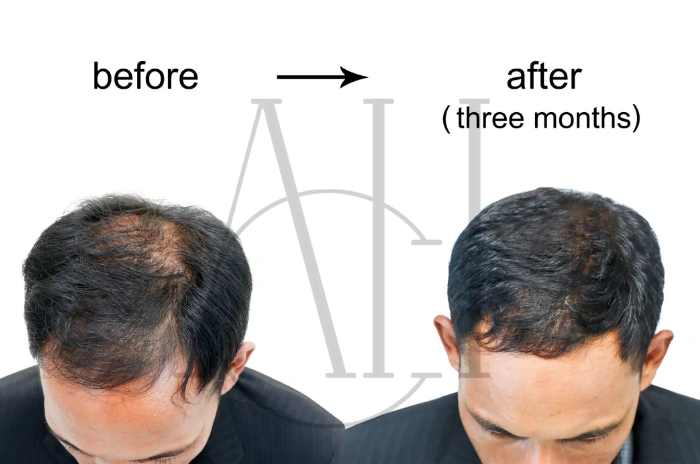
Following a Micro FUE in Rome, the hair regrowth timeline after transplant unfolds gradually. In the first 1-3 months, transplanted hairs enter a resting phase, often shedding (shock loss) around weeks 2-4—this is normal and temporary. New growth emerges at 3-4 months, with fine, short hairs appearing; by months 6-9, thickening occurs, reaching 60% visibility. Full density and natural texture typically manifest by 12 months, though some patients see peak results up to 18 months later. Rome clinics monitor progress via follow-ups to ensure alignment with this tempi di ricrescita capelli trapiantati.
Will transplanted hair remain permanent and resistant to hair loss
Yes, transplanted hair from Micro FUE is designed for permanence. Follicles sourced from the DHT-resistant donor zone (back/sides) retain their genetic resilience, continuing to grow lifelong in the recipient area despite ongoing hair loss causes like androgenetic alopecia. Unlike native hairs prone to miniaturization, these grafts resist balding hormones, offering stable, natural coverage. In Rome, surgeons select robust donors to enhance this long-term stability, with 95%+ graft survival rates.
Care and post-operative guidelines for best results
Adhering to care after hair transplant protocols is key to Micro FUE results. Days 1-3: Spray saline solution every 2-3 hours to hydrate and prevent crusts; sleep elevated to reduce swelling. Weeks 1-2: Gentle shampooing with mild, clinic-provided products; avoid sun, alcohol, and strenuous activity. Months 1-3: No scratching; resume light exercise after 10 days. Rome’s best hair transplant clinics in Rome provide aftercare kits and virtual check-ins for 90%+ success.
Who is Ideal for Hair Transplant in Rome with Micro FUE
Rome’s specialists assess candidacy during online hair transplant consultation to match Micro FUE technique with patient needs, ensuring realistic hair transplant density and coverage.
Criteria: donor zone density, stable hair loss, realistic expectations
Ideal candidates for Micro FUE in Rome have donor density of 40+ follicles/cm², stable hair loss (no progression for 6-12 months), and age 25+ with realistic goals. High donor quality preserves zona donatrice come si preserva, while stable patterns prevent uneven results from progressive thinning. Expect consultations to evaluate via photos for tailored androgenetic alopecia solutions.
Suitable cases: receding hairline, thinning crown, moderate baldness
Micro FUE excels for Norwood 2-4: receding hairline restoration (1,500-2,500 grafts), thinning crown filling (2,000+ grafts), and moderate baldness blending. Rome patients with these patterns achieve natural hair density in transplants without overharvesting.
When transplant may not be enough and what alternatives exist
For diffuse or rapidly progressive thinning, transplants alone can’t halt loss—combine with meds. Alternatives include minoxidil/finasteride for stabilization, PRP/exosomes for early regrowth, or SMP for illusion of density. Rome clinics recommend consulenza trapianto capelli online to explore non-surgical hair transplant alternatives.
Visiting the Clinic in Rome or Booking an Online Consultation
Rome’s central location facilitates easy access, with booking hair transplant options blending in-person and virtual for global patients.
How many appointments are required from start to finish
Most hair transplant procedure in Rome needs 2-3 visits: initial consult (in-person/virtual), surgery day, and 1-month follow-up. Extensive cases may add a 6-12 month check; prenotare trapianto capelli streamlines via apps for efficiency.
Options for remote pre-evaluation with photos
Online hair transplant consultation uses 5-7 scalp photos (front, top, sides, back) for accurate assessment—no travel needed initially. Rome experts analyze donor viability and graft estimates remotely, transitioning to in-clinic for procedure.
Guidance for patients traveling from outside Rome
International patients: Arrive 1-2 days pre-op; fly home after 48 hours (short-haul) or 5-7 days (long-haul) to minimize swelling. Clinics offer partnered hotels, airport transfers; post-op, avoid pressure—use neck pillows. Intervento trapianto capelli Roma packages include recovery support.
Advantages of Micro FUE Hair Transplant in Rome
Micro FUE in Rome leverages precision tools for superior scarless hair transplant outcomes, prioritizing aesthetics and recovery.
High density grafts and natural hair distribution
Achieve 50-60 grafts/cm² with Micro FUE, enabling lush, feathered natural hair distribution that mimics growth patterns. Rome surgeons customize angles for undetectable blending, enhancing densità capelli trapianto.
No visible scars and minimal invasiveness
Tiny 0.6-0.8mm punches yield dot-like scars that fade invisibly, even with short styles—true no-scar hair transplants. Minimal downtime (3-5 days) suits active lifestyles, with less pain than FUT.
Long-term stability and natural look even with short hair
Grafts from resistant zones ensure lifelong growth, defying progressive thinning for enduring natural look. Versatile for any hairstyle, Micro FUE results maintain aesthetics over decades.
Understanding the Limits and Risks of Hair Transplant Surgery
While transformative, hair transplant risks and constraints require informed decisions, especially for progressive thinning management.
Why a transplant solves bald areas but not progressive thinning
Transplants repopulate fixed bald spots but don’t halt ongoing loss in untreated areas, potentially leading to patchy appearances over time. Pair with finasteride for comprehensive alopecia androgenetica soluzioni; Rome consults address this via planning.Conditions that determine if you are a suitable candidate
Stable loss, good health (no scalp disorders), and sufficient donor (no DUPA) are essential; young patients (<25) risk progression. Screen for caduta capelli cause like stress to confirm fit.
How the donor area quality affects long-term results
Poor donor density/quality limits grafts, risking overharvesting, thinning, or reduced hair transplant density. High-quality donors ensure sustainable preserving donor area, vital for future touch-ups.