
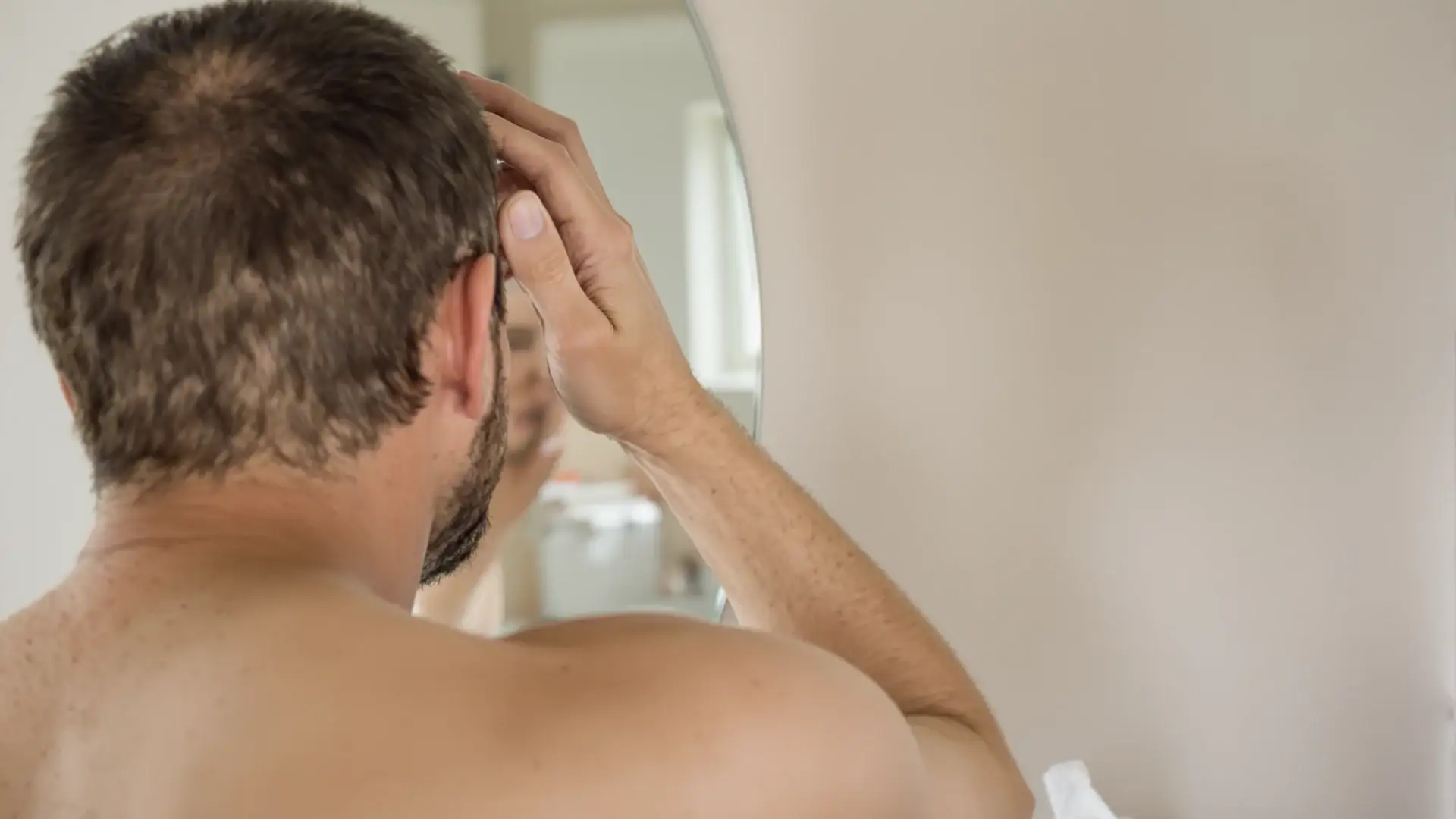


The Fundamental Difference Between DHI and FUE
Straightforward difference. FUE and DHI both kick off the same way: extracting individual hair follicles from the donor area with a tiny punch tool. Then the similarity ends. What sets them apart is how those grafts get placed.
In standard FUE, the surgeon extracts all grafts first, then makes recipient sites (small incisions) across the balding area, and finally implants each graft into those pre-made holes. It's a three-act procedure. You handle the grafts twice: once to store them, once to insert them. That extra handling matters because hair follicles dry out fast outside the scalp. Leave them out too long, and survival rates dip.
DHI collapses two of those steps into one. Surgeons use a specialized tool called the Choi implanter, which looks like a pen with a hollow tip. Loading the graft into the tip, the surgeon pierces the scalp and deposits the follicle in a single motion. No separate incision step. There's no intermediate storage phase. Each graft goes from extraction tray to scalp in seconds.
Speed has a real effect here. The gap comes down to exactly that exposed-to-air window.
The other practical difference is density control. With DHI, the surgeon can angle and space each implant individually because they're making each recipient channel on the fly. They can follow the natural whorl patterns of the hair (match existing growth directions) and pack grafts tighter where needed. With standard FUE, the pre-made channels lock in a pattern before the grafts arrive - less flexibility.
FUE does have one edge, and it's faster. The surgeon doesn't need to swap tools between creating sites and implanting. A 3,000-graft session in FUE might run 6-8 hours. The same count with DHI often pushes past 10 hours. Some clinics split larger sessions across two days for DHI.
Bottom line: DHI buys better graft survival and more natural direction control at the cost of longer chair time. FUE trades some precision for speed.
How FUE and DHI Extraction Are Identical
Here's what most clinic websites won't tell you: the extraction step in both FUE and DHI is mechanically identical. The difference people obsess over - the "technique" - only kicks in after the follicle is out of your scalp. Extraction itself? Same punch. Same handpiece. The movement's identical.
Both methods use a micro-punch, typically 0.8 to 1.0 millimeters wide. That punch spins, or oscillates, to cut a circular incision around each follicular unit. The surgeon then lifts the unit out with forceps. In FUE. In DHI. No difference there
Some clinics claim their "DHI extraction" is gentler, and that's marketing, not medicine. All from the same hand on the same tool: pressure (depth) and angle. The only variable is surgeon skill, not the label on the procedure.
Same tool, same motion
Let's pin down the specifics. The motor-driven punch makes a circular cut around 1 millimeter deep. That's it. Whether the clinic calls it FUE, DHI, or sapphire blade extraction, the underlying mechanics are the same. The punch enters the skin, cuts around the follicle, and exits. Then jeweler's forceps lift the graft from the scalp. Identical.
What about the incision angle? Both FUE and DHI require the punch to follow the natural hair angle, usually 20 to 40 degrees depending on the scalp area. A surgeon who can't hit that angle in one technique won't hit it in the other. They're the same motion.
Here's the truth: in both methods, the graft gets touched by forceps once during extraction and once during placement. The handling is equal. The difference is whether the grafts go into a petri dish (FUE) or an implanter pen (DHI), and that's a placement detail, not extraction
Same force, same time
The force required to extract one graft falls in the same range for both techniques. Surgeons measure this in Newtons, roughly 0.3 to 0.5 Newtons per graft. Too much force, and you crush the follicle, and too little, and the graft won't release. The ideal extraction force is identical whether the clinic brands it as FUE or DHI.
Time per graft? Roughly 10 to 15 seconds for an experienced surgeon. Again, no meaningful difference.
The Choi Implanter Pen: What Makes DHI Different
The Choi implanter pen is the single piece of hardware that sets DHI apart from standard FUE. In a regular FUE procedure, the surgeon extracts grafts one by one, then opens recipient sites with a separate blade or needle. After that, a technician loads each graft into a forceps, and the surgeon places it into the pre-made hole. That's two distinct steps-creation and insertion-done in sequence.
DHI collapses those steps into one. The Choi pen is a hollow, spring-loaded tool about the size of a thick marker. A technician loads a single graft into the tip. The surgeon pokes the pen into the scalp (triggers the plunger) and the graft slides directly into the tissue. No pre-made incision. No forceps transfer. One motion (one graft) one second. The pen itself is disposable-single-use to keep things sterile-but the mechanism is precise enough to control depth (angle) and direction in real time.
So why does it matter, and two big reasons. The first reason: grafts spend less time outside the body. When a hair follicle sits in saline-waiting to be placed-its cells start to dry out. They lose viability. With the Choi pen, that waiting window drops to nearly zero.
There's another advantage: the surgeon controls exact placement from the start. In standard FUE, holes are opened based on a plan drawn earlier. The scalp moves. Skin stretches. The original grid can shift. With the Choi pen, the surgeon sees the actual condition of the recipient area as he works-bleeding points (existing follicles) tissue elasticity-and adjusts each placement on the fly. That's what separates a stereotypical pluggy look from a natural hairline.
But not all Choi pens are the same, and two main variants exist: blunt-tip and sharp-tip. Blunt pens push tissue aside-they don't cut it-so bleeding is reduced. But they require a slightly firmer push. Sharp pens cut a micro-channel. That gives more precise depth control, but it creates a tiny wound that has to heal. Most experienced DHI surgeons use a mix-sharp for dense areas like the crown, blunt near existing hair to avoid transection. A good team will swap between them based on what the scalp needs that second.
Honestly, the first thing you notice is the rhythm.
Shaving Requirements: FUE vs. DHI
The most visible difference between FUE and DHI? How much hair gets shaved. It's not a small detail - it changes how you plan your recovery (how you schedule time off) and how obvious the procedure looks to everyone else.
FUE: The full-shave approach
Classic FUE almost always means a completely shaved head. The surgeon trims the entire donor zone - usually the back and sides - down to 1-2 mm. Same for the recipient area where grafts will go. This gives the extraction team full visibility and makes the punching process faster. For a 3,000-graft session, that saved time matters. The downside is obvious: you're walking around with a buzzed scalp for weeks. Patients who can't take time off often shave everything pre-op and wear a cap until the redness fades.
DHI: Partial shave, faster return
DHI lets you keep most of your existing hair. The surgeon only trims a narrow strip in the donor zone - roughly an inch wide - for extraction. The recipient area stays untouched. Grafts go straight into the thinning spots, leaving surrounding hair untouched. So the next day, you look fairly normal. Here's the trade-off: partial shave takes more skill from the extraction team and usually runs longer per session
What about the "no-shave" option?
Some clinics advertise no-shave FUE or DHI for small sessions, and realistically, that only works for 500-1,000 grafts. Beyond that, the donor area needs enough visibility to avoid transection-cutting through grafts during extraction. If you're targeting 2,000+ grafts, expect at least a partial shave. Full shave remains the standard for high-density work because it gives the surgeon the cleanest view of follicle angles.
Recovery starts with the shaving decision. FUE patients usually wait 8-10 days for the stubble to grow enough to look intentional.
Which Technique Suits Large Coverage vs. Dense Hairlines
Let's cut through the marketing. Both DHI and FUE can cover a lot of ground, but they shine in different spots. The choice comes down to whether you need to fill a large bald area or craft a natural hairline.
Large Coverage: The FUE Advantage
For guys with Norwood class 4 and up (thinning crown (receding temples) a balding top), classic FUE tends to be the workhorse. Because extraction and implantation happen in two separate passes, the surgeon can harvest a high number of grafts in one session. Enough to handle the front, mid scalp, and crown all at once
The trade-off? You punch recipient sites with a blade or needle first, then place the grafts. That leaves less room for tight graft packing, and fUE density usually lands at 35-45 grafts per cm². Plenty for coverage, though scalp might still peek through.
Dense Hairlines: DHI Does Detail
DHI uses a Choi implanter pen, no separate recipient-site step needed. The surgeon loads each graft into the pen and implants it at the exact angle and depth. That control pushes density higher: 50, even 60 grafts per cm². Perfect for the hairline, every millimeter counts there.
Problem is speed. DHI is slower per graft. A typical session maxes out at 3,000-3,500 grafts. If you need to cover a large crown and a hairline, you're looking at two sessions or a hybrid approach.
The Real-World Sweet Spot
Most top US clinics don't stick to just one method. So they'll do FUE for the bulk volume, then switch to DHI for the hairline and temples. You get coverage, and density, right where it matters. That's the honest answer when you're sitting down to weigh dhi vs fue hair transplant for your own case.
Know your goal first, then pick the tool