
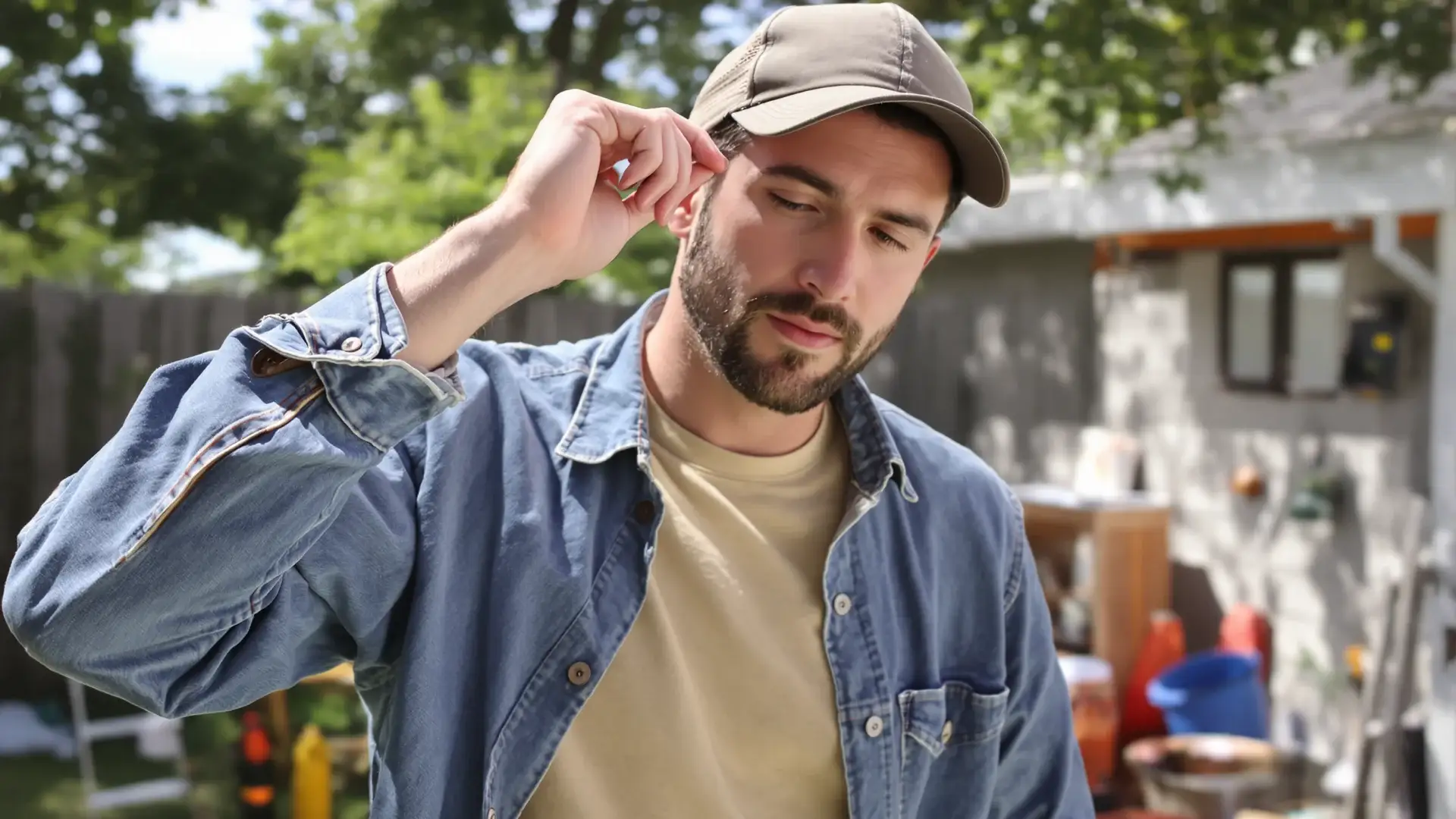


Does wearing a hat every day cause a receding hairline?
The short answer is no, and wearing a hat daily does not cause a receding hairline. That myth has persisted for decades, but it does not align with current understanding of hair loss.
A receding hairline is almost always driven by genetics and hormones-specifically, a condition called androgenetic alopecia, or male pattern baldness. This condition affects roughly 50 million men in the U. S. and is tied to how hair follicles respond to dihydrotestosterone (DHT). A hat has zero influence on that biological process.
The worry comes from a few related factors. There are three main factors.
The first is tight hats. If a hat is snug enough to leave a deep ring around the forehead, it can place traction on the hair shafts. Over months, that may cause temporary breakage at the hairline. But breakage isn't permanent loss. The follicle stays alive. Hair grows back once the person switches to a looser fit or skips the hat for a while.
The second factor is sweat and oil buildup. Wearing a hat all day traps heat and moisture against the scalp. That environment can irritate the skin or worsen existing dandruff, and but it does not kill follicles or cause permanent shrinkage. Shampooing every 1-2 days and letting the scalp breathe constitute a proper wash routine that keeps the scalp healthy.
Third, the hat itself isn't to blame for a receding hairline. Many men begin to notice a thinning hairline in their 20s or 30s, at the same time they frequently wear hats. This is a coincidence of timing, not cause and effect.
Patients sometimes arrive at the clinic holding a baseball cap, convinced it ruined their hairline. Quick examination of family history-father bald, uncles bald-tells the whole story.
Wearing a favorite cap daily doesn't cause a receding hairline. If the hairline is receding, genetics is the cause, not cotton or wool.
Can a tight hat cause traction alopecia?
Tight hats can cause traction alopecia, but it's a mechanical issue, not a mysterious one. Traction alopecia results from prolonged tension on the hair follicles. The process resembles pulling a weed: pull often enough from the same spot, and the root gives out.
The key word here is tight . Snug caps worn for a few hours don't typically cause traction alopecia. Such wear is unlikely to cause trouble. Wearing a hat that go away red marks on the forehead or presses against the hairline for over 10 hours daily can cause issues. That is where the risk arises.
Some patients worry that wearing hats causes a receding hairline, but the risk is real only if the hat constantly tugs on the hair. Traction alopecia appears along the edges: the temples (the nape of the neck) and sometimes above the ears. It's distinct from male pattern baldness, which follows a predictable crown-and-hairline pattern.
Traction alopecia is usually reversible if caught early, and the hair follicles are not dead-they're simply stressed. Stopping the tension allows most people to see regrowth within three to six months. Still, if ignored for years, scarring can set in, and that is permanent.
Practical signs your hat might be too tight:
- A headache after wearing the hat for an hour is a sign.
- A lingering red groove across the forehead indicates tightness.
- Hair along the temples appearing thinner or shorter than the rest is another sign.
- Needing to yank the hat off rather than slide it suggests a tight fit.
If thinning at the edges is noticed, switching to a looser fit is advisable. Hats with an adjustable strap or stretchier fabric, such as flexfit or dad-hat styles, tend to be gentler than rigid snapbacks. Hats should be washed regularly as well. Sweat and grime can irritate the scalp and worsen tension from hats.
Traction alopecia is cumulative, and pulling two hours a day for five years adds up. Daily hat wearers should give their scalp breaks. Removing the hat at the desk helps. Hair should be aired out at home. Rotating between hat styles varies the pressure points.
A sensible hat (even a daily one) won't cause a receding hairline on its own. A chronically tight hat, however, is a different story, and that tightness can cause a receding hairline over time.
Does a sweaty or dirty hat damage hair follicles?
The short answer is no. A sweaty or dirty hat will not damage hair follicles on its own. Sweat is mostly water and salt. Dirt and oil can build up, but that's a hygiene issue, not a follicle killer. Grime and oil can build up - but that's a hygiene issue, not a follicle killer.
Here's what actually happens. When you wear a cap for hours, especially in heat, your scalp sweats. That moisture sits against the skin. If you don't wash the hat or your hair regularly, bacteria can multiply. That can lead to scalp irritation or even a mild infection called folliculitis-inflamed hair follicles. Folliculitis can cause temporary shedding, but it rarely kills the follicle for good. Once you treat the inflammation, hair usually grows back.
I've asked several dermatologists about this, and they all say the same: a hat doesn't suffocate follicles. Follicles get oxygen from blood, not air. A dirty hat might irritate your scalp, but it won't make your hairline recede. The bigger risk is friction-if your hat is too tight, it can pull on hair and cause traction alopecia. But that's about tightness, not sweat or dirt.
What should you do?
- Wash your caps every week or two-especially if you sweat a lot. Use a gentle detergent.
- Shampoo your scalp regularly, but not every single day. Washing your hat twice a week is usually sufficient, unless you've been sweating heavily.
- Make sure the hat is completely dry before you wear it again. Damp fabric creates a breeding ground for bacteria.
- If you notice red bumps (itching) or scaling on your scalp, consult a doctor. The issue is likely not permanent, but early treatment is advisable.
So (if you're asking) does wearing hats cause receding hairline -the sweat and grime are not the real cause. Genetics and hormones are the actual drivers. A dirty hat might irritate your scalp for a week, but it won't cause your hairline to recede.
You can continue wearing your favorite cap. Just wash it occasionally.
Why does hair look thinner right after taking a hat off?
This is an optical illusion, not actual hair loss. When you remove a cap after wearing it for a few hours, the hair is flattened by the hat's pressure and the sweat underneath. Strands that normally stand upright or sit at an angle become pressed flat against the scalp. That flattening makes the hair part look wider and the overall density appear lower. You end up seeing more scalp than usual, and it feels thinner.
Hair maintains its shape partly due to natural oils and moisture. A hat accelerates the accumulation of sweat. It also dirt, coating each strand. The coating clumps hairs together, leaving gaps between the clumps. These gaps make hair appear thinner even when no follicles have been lost.
The sweat-and-oil factor
Scalp sebum and sweat build up faster under a hat because the fabric traps heat. This greasy layer causes hair to stick together in patches, exposing more scalp between them. The effect is similar to wet hair; it always looks thinner than dry hair because the strands consolidate. Once the sweat dries, running fingers through breaks up the clumps and restores full volume.
No permanent impact on the hairline
The impermanent appearance after removing a hat is unrelated to male pattern baldness or follicle damage. The interrogative of whether hat - wearing causes a receding hairline arises often, and the answer is no. A receding hairline is driven by hormones and genetics, not by how many hours someone wears a 59Fifty. The thinner appearance noticed after hat removal is mechanical flattening combined with clumping from sweat.
Hair go back on its own in about 10 - 15 minutes. A quick head shake or a light run-through with one's fingers restores most of the volume. To speed recovery, a dab of dry shampoo or walking into a humid bathroom can fluff the roots.
The post-hat thin look is a cosmetic illusion, not a sign of balding. The hairline is safe.
What actually slows a receding hairline?
If someone is worried that their cap is accelerating a receding hairline, it's not. What actually slows a receding hairline comes down to biology, not fabric. Androgenetic alopecia - male pattern baldness - is driven by DHT attacking follicles. That equation is changed by A hat.
What works, and proven medical treatments. Minoxidil (Rogaine) stimulates blood flow and pushes follicles into growth phase. Those two together? That's the backbone of any real slowdown strategy.
Then there's low-level laser therapy (LLLT), and not a gimmick in clinical use since 2007. The 650nm wavelength penetrates the scalp and boosts cellular energy. Still, they're legit if you stick with it
Nutrition plays a role, but its influence should not be overstated. Iron deficiency and low vitamin D are linked to shedding, and a simple blood test can rule those out. What about biotin supplements? Biotin supplements are mostly wasted unless the individual has a genuine deficiency. Saving money on unnecessary supplements is advisable.
Stress management matters more than most men realize. Telogen effluvium (a temporary shedding triggered by major stress) can make an existing recession look worse for 3-6 months. Exercise (adequate sleep) and lowering cortisol are key, and these aren't glamorous solutions, but they're effective.
Another condition to consider is traction alopecia. Traction alopecia is a different condition (caused by mechanical damage from tight ponytails) braids, or very tight headwear. It can cause localized thinning at the temples if a cap is snug enough to leave ridges on the forehead. That isn't what is happening to the hairline
The short list of things that actually slow it down includes finasteride (minoxidil) possibly a laser cap, good blood work, and less stress. Those are the factors that make a real difference.
For the surgical side of hair restoration, see our pages on what a hair transplant involves and hair transplant costs in Albania.